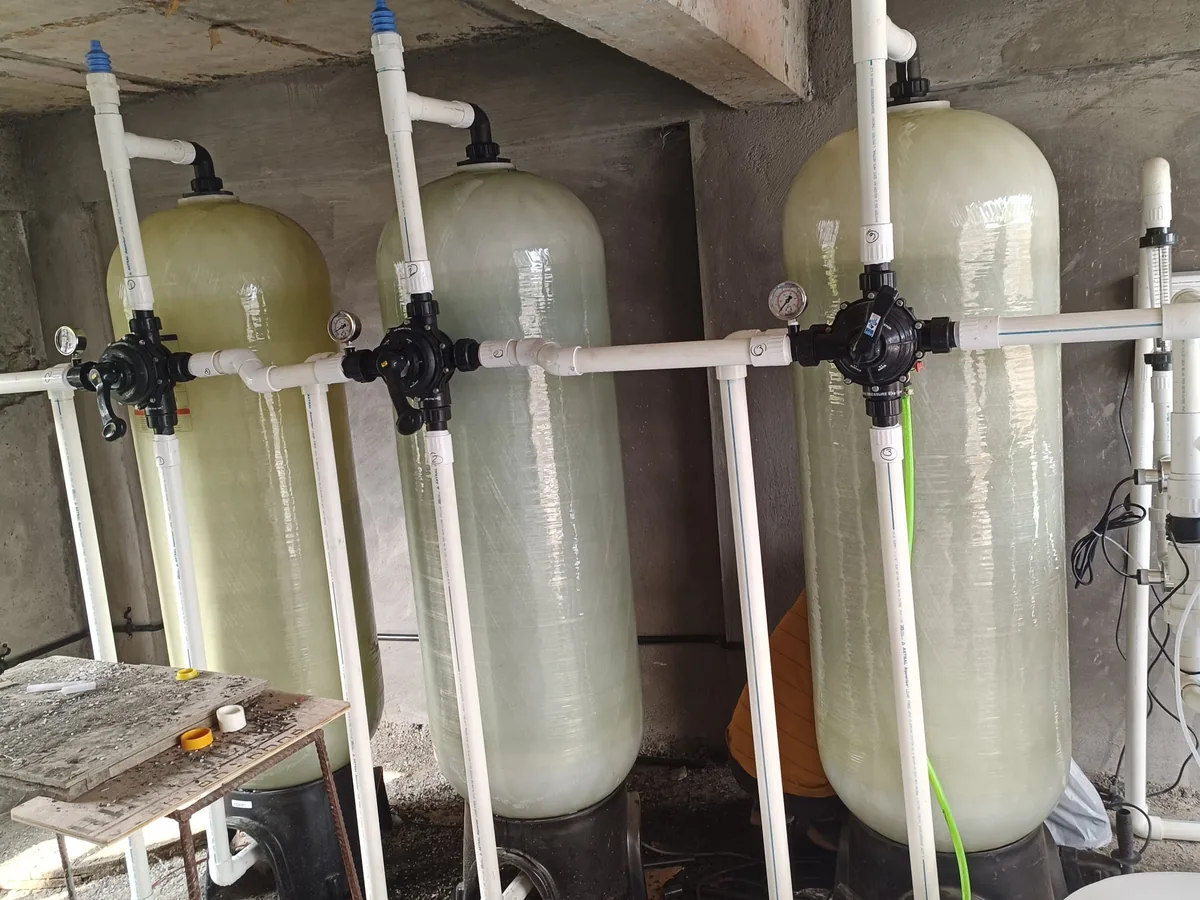
A Demineralisation (DM) plant removes nearly all dissolved minerals from water using ion-exchange resins. Where an RO plant reduces salts to a low level, a DM plant takes purity much further — down to almost zero conductivity when a mixed-bed polishing stage is included.
How a DM plant works
Water passes through two resin beds in sequence:
- A cation exchanger, where positively charged minerals are exchanged for hydrogen ions
- An anion exchanger, where negatively charged minerals are exchanged for hydroxyl ions
The hydrogen and hydroxyl ions combine to form water, so the dissolved salts are effectively replaced by pure water. When the resins are exhausted they are regenerated — the cation resin with acid and the anion resin with caustic — and the plant is ready again.
Where DM water is required
- Boiler feed water: DM water prevents scale and corrosion in high-pressure boilers
- Pharmaceutical and healthcare processing, where water purity is critical
- Laboratories and testing facilities
- Electroplating, textile processing and other processes sensitive to dissolved minerals
DM plant or RO?
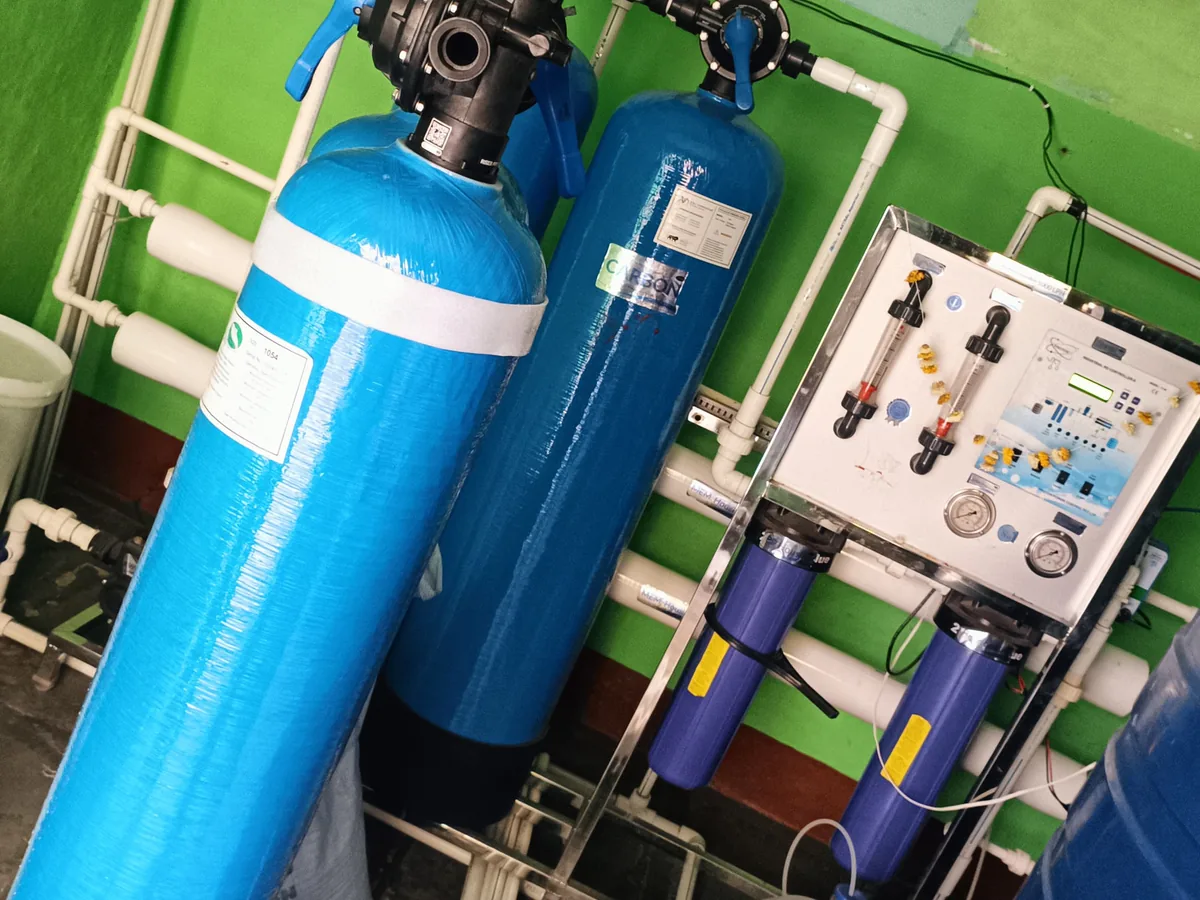
For many applications the practical answer is both. RO is an excellent first stage because it removes the bulk of the salts cheaply; the DM plant then polishes the water to very high purity. This RO + DM combination cuts chemical consumption and regeneration frequency compared with DM alone.
Operating a DM plant
A DM plant needs regular regeneration and resin care. The frequency depends on the feed water quality and the volume treated. A well-run plant with scheduled maintenance gives years of reliable, high-purity water; irregular regeneration is the most common cause of poor outlet quality.
Share your feed water analysis and the conductivity or purity you need at the outlet, and we will recommend the right DM configuration — with or without an upstream RO.